| In the year 1800, when there was a great rage for immigrating to
Ohio. Several families had left for that then distant El Dorado of the
west. Nehemiah and Benjamen Churchill, sons of Ezral, were smitten with
the "Ohio Fever" as it was called.
Not being able to carry out their plans from some cause, they removed
back into the woods, with their families, several miles beyond the most
distant settlers at "the ponds" as all the country above the Mills at Milltown
was then called. They gave their settlement the names of their wished for
the western homes.
THE FIRST PEOPLE TO SETTLE
OHIO
| John Saunders |
Nathan Crosby Sen. |
Jesse Cann |
| Eleazer Butler |
Knowles Crosby |
John Cann |
| Robert Butler |
John Crosby |
Joseph Porter |
| Nathan Butler |
Joseph Watson Patten |
Joseph Whitehouse |
| Robert Durkee Sen. |

Ashabel Wyman |
Benjamen Whitehouse |
| John Durkee |
Manasseh Cook |
Jacob Vickery |
| Robert Durkee Jr. |
Elias Trask |
Nathan Crosby |
| Ward Handy |
William Fletcher |
William Moses |
| James Allen |
Nehemiah Churchill |
Elenezer Crosby |
| Jos. Alden Ellis |
Benjamin Churchill |
|
Just outside of Yarmouth town is the old homestead
property of Phineas Durkee of 1762. Robert, one of his descendants was
among the pioneers of Ohio.
These early settlers first cleared away the forests in order to build
their homes and get in the crops. They first built log houses until they
could get in a position to erect better homes. Berries were very plentiful.
I heard a woman tell that her mother while waiting for the members of her
household to come to the mid day meal, stepped out of doors and picked
a large quantity of berries which in the afternoon she exchanged for groceries.
The Cape Fourchu river, called by that name probably on account of its
being forked flows through Ohio. Some authorities call it the Yar river
believing it to be the river from which Yarmouth got its name. One branch

of the Cape Fourchu river flows through Hebron and Ohio nearly to Lake
George and another branch flows through the salt pond dyke to Chipman's
Corner.
The river widens in Ohio to form Bunkers Lake the fourth of the chains
of lake extending from Lake George to Milton and connected by this river.
It probably received its name from Paul Bunker, one of whose lots of land
lay near its foot.
This river forms a good mill site and the early settlers gave their
attention to lumbering and timbering but more lately people attend to farming
and bringing cordwood to the Yarmouth market. The surplus farm products
and building materials from saw mills at Ohio helped make cargoes for the
West Indies. Returning from the West Indies the cargoes were molasses,
sugar, etc.
Enoch Crosby may be taken as a type of the older Ohio farmer. After
spending an ordinary life-time in building up his valuable homestead property
on the western side of the Cape Fourchu river, he sold it to Nelson Cann
and retired to Deerfield, where some of his children had settled, and soon
transformed his new home, which was a very rough place, so that it is now
the chief ornament in that part of the county.
THE INDIANS
Previous to this time when the first settlers came from Chebogue to
Ohio there were Indian settlements in Ohio. Although Indians settled and
named many of the neighboring villages. Chebogue is an Indian name, derived
from Che and Paug meaning Great Still Water, also Chegoggin meaning Great
Encampment, and Tusket meaning the Great Forked Tidal River.
The Indians used to make excavations for their winter stalk of corn
and dried fish. These store houses were five or six feet deep and five
to fifteen feet wide. As a protection against rain and frost they covered
them with poles, dried grass, and sods.
Many years ago there was an Indian encampment by the side of Government
Brook. At that time wild animals were numerous and the Indians were occupied
in hunting and making baskets. They had the Indians usual appetite for
liquor. They drank it unmixed until they could drink no more. One Indian,
John Pete, had his heel cords cut by the members of his tribe for some
of his evil deeds. A family of Indians called the Bartlets sent their children,
Chris, Mattio, and Blums to school. Mrs. Judy Bartlet used to make baskets
and exchange them for fine laces and home made garments. Mrs. Piper who
lived near theses Indians evidently esteemed Mr. Bartlet very highly.
With the exception of the Bartlets the Indians seldom stayed in Ohio
more than a few months at a time. The first Indians that came to our village
lived in wigwams. Those that came in later years built log houses. Now
as in all provinces here is not a trace "of the gentle race That has passed
away forever"
The memory of the Old Man
How can it pass away
While their names of music
On each mount and stream and bay;
While Musquodoboit's waters
Roll sparkling to the main;
While falls the laughing sunbeams
On Chegoggin's field of grain.
OLD CUSTOMS
In arranging a fire in an old fire place. First a large log called the
back log was put at the back, then the andirons were placed against this
log at right angles to it and the fore log was placed on the standards
of the andirons. The smaller materials were then placed on the andirons
between the back and fore log. This left a space beneath for draught and
for the coals to drop down where they were easily obtained.
Bread was cooked in an iron kettle. This kettle was put in front of
the fire place and surrounded with coals. It had a cover constructed so
that coals might be placed on the top of the kettle. A baking oven was
used in baking cakes and biscuits. This was shaped like a sloping roof
with an open space towards the fire. There were cleats inside of this upon
which to set the pan containing the food. This baking oven was set upon
the hearth and the coals were shoveled around it. This was somewhat inconvenient
as the cinders were often scattered over the food. For frying and boiling
meats and vegetables, griddles and boilers were hung upon a crane.
The houses were lighted by means of candles. At certain times our ancestors
took a day for moulding candles. They ran tallow into moulds in which wicks
had previously been arranged. The women wove cloths called homespun, and
then made them into garments.
The daughters of families in ordinary circumstances had one dress of
homespun cloth each year. Girls labour was valued at the rate of sixty
cents a week. A seamstress usually got seventy cents a week. Woman used
the cheap wool left from weaving for making mittens, which sold for fifteen
cents a pair. These were called Sale Mittens because they were to be sold.
There was usually a room provided in the home for drying grain. Buckwheat,
barley, and rye were raised, and taken to the grist mills to be grounded
into flour. Nearly every family kept sheep. In the autumn a beef creature
and a pig were killed and kept in provision for the winter.
A shoe maker was hired from time to time to come to the different houses
and make shoes for the family.
OHIO STATION
In the winter of 1869 the first surveys were made for a railroad between
Yarmouth and Annapolis and in April the Western Counties Railway was incorporated.
New surveys were made in 1873. The first rail of the Western Counties R.R.
was laid near Lovitts Wharf. The first spike was driven by G.B. Dane, president
of the company.
The first locomotive "The Pioneer" arrived at Yarmouth October 20, 1874
and the first trip was made October 28, 1874. The road was formerly opened
to traffic between Yarmouth and Digby September 29, 1879, the first passenger
ticket being purchased by J.R. Kenney, M.P.P. The first excursion a "Maying
Party" left on May 10, 1875 going as far as the Pitman's Road, just above
Ohio, with twelve platform cars between 1100 and 1200 passengers accompanied
by Milton Brass Band.
The D.A.R took over the control of the Yarmouth and Annapolis R.R Oct.
1, 1894.
MAIL
The first Post Master of the village was Mr. Wm. Crosby. On January
1, 1882, our first mail was brought to us by railway. Previous to this
date it was brought by coach. Coaches used to run between Yarmouth and
Digby.
MANUFACTURES
In the year 1853 George and William Crosby came from the United States
and commenced the manufactures of Boots and Shoes in the American way of
doing things. They kept at the business for several years, and made a success
as long as the works were kept running.
About the year 1876 a large building was erected and a company organized
for the manufacture of cheese, with a first class plant. They manufactured
cheese for years, but owning to the cost of milk and low price of cheese,
on account of competition in the market the business closed.
A large wood-working factory was built by Mr. George Crosby in the year
1891. In this factory were manufactured rakes, clothes pins, hand sleds,
broom handles, wash boards and various other articles. A vessel with a
cargo of spool wood was wrecked in Yarmouth Harbour and the wood was forwarded
to Ohio and used in this factory. This factory is not running at present
time.
At one time there was a Champion Linament factory in Ohio. This factory
was burned about eight years ago in the fire which left this and the three
principal stores of the village in ruins.
There has always been a saw mill in Ohio and in former days there was
a grist-mill. Mr. Elias Trask built the first saw mill. Lumber was formerly
exported from Ohio. At the present time shingles are made in the place
where Mr. Trask first run his mill.
The early settlers of Ohio raised much more grain than is raised at
this time. Nearly all the farmers raised wheat, rye, barley, buckwheat,
and oats. This was taken to the different grist-mills on the Cape Fourchu
river and ground into flour, not equal to superfine Genesee, but which
made good bread.
These different manufactures made Ohio a thriving village of quick growth
and second to no other in the county from a business stand point.
SHIP BUILDING
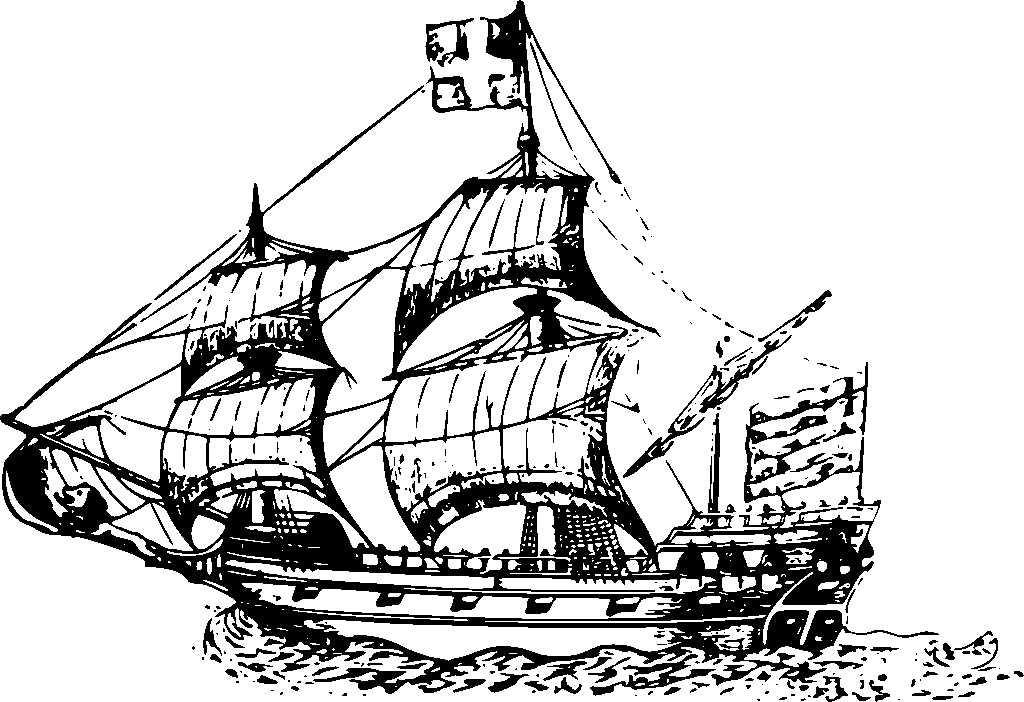
In 1833 was laid the foundation of the magnificent fleet that a few
years after grew to be one nintieth of the tonnage of the British Empire,
and carried her flag into every sea and into every port of the world. But
finally like all wooden ship building there is barely any sail of it left,
on account of the enormous growth of steel ship and steam marine.
In the days when Yarmouth took the lead in ship building a great many
of the citizens of Ohio were ship owners. Below are some verses composed
by the great grandparents of the present inhabitants of Ohio about those
who owned a share in a vessel called the "Ohio".
| Old Uncle Enoch, Ohio Nate |
Old Aunt Hannah, Little Mary Nate |
| High-blooded Trask and old Uncle Jake |
Big Ab Trask, Aunt Thia Jake |
| Skipper Jim Robbins, Capt. John Cann |
Chunky Mrs. Robbins, lean Becky Cann |
| Squire Lord Porter and King Jesses Cann |
Fat Bitsy Porter and Quenn Nabby Cann |
Click on pictures for enlargement
EDUCATION
The education interests of the young were taught in two small houses
one of which was on the land
near where the Ohio church now stands. The other one was located and is
now a part of the store of Wm Crosby. About the year 1850 the two districts
came together and built a very nice school house, with a hall in the upper
story, on the lot of land nearly opposite where our present house now stands.
This house was a long step in advance of the first two .
There were but few branches taught to the pupils, but they were practical
ones. Our present school house was built in the year 1867 at the commencement
of the present free school systems. Ohio school has two departments, the
advanced and the primary.
CHURCHES
Previous to the year 1851 the people of Ohio attended worship at Hebron
church or held services in the two small school houses. At Hebron in 1837
there was organized a Baptist congregation designated "The Second Baptist
Church of Yarmouth". A few years later, on February 15, 1851, a church
was established in the Ohio district, its relationship with the older body
suggested by the name, "The Ohio Baptist Congregation in connection with The
Second Baptist Church of Yarmouth".
A place of worship was completed and dedicated in 1852. On September
10 of the same year, 36 members were dismissed from the parent church in
Hebron to become the charter members of the South Ohio church.
Elder James Reid became the first pastor of the new congregation, an
office in which he was succeeded in 1858 by Lic. Joseph Sanders. Mr. Saunders
served until 1870 and returned for a second ministry with the congregation
during the years between 1898 and 1904.
By 1884, the community had grown beyond the capacity of the church.
So a second church was build and opened in February, 1887, the dedication
sermon was preached by Rev. J.B. Woodland. This building was called North
Temple church and its people continued for seven years as a separate pastorate.
During its brief life span, the North Temple was served by three pastors,
Rev. H.N. Perry, Rev. F.M. Young, and Rev. Trueman Bishop.
Meanwhile, the original body build a new church and opened it for uses
on January 27, 1889. The two church organizations in South Ohio functioned
independently until 1894 when it was agreed to share the services of one
pastor. In 1905, the two groups united and the North Temple passed out
of existence.
The outward appearance of the Baptist church in South Ohio underwent
a marked change in 1917 when on July 30, the structure was struck by lighting.
In making repairs, the spire and belfry were removed and the tower was
rebuilt in its present form.
Pictures from postcards about 1900
|